WhatsApp: +86-13924619950

Metal
Nonmetal
Rhinestone
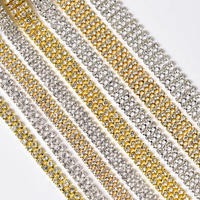
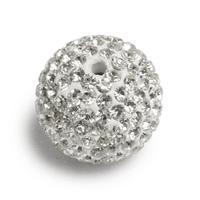
Common rhinestones you’ll come across include Swarovski, Preciosa, and Chinese Crystal. Some colors might have lead, cadmium, or other heavy metals, so it’s worth checking if they meet eco-friendly standards before buying. Prices can vary a lot between brands because of things like cutting quality, where they’re made, and environmental requirements—so just go with what works for you. Usually, rhinestones are attached using glue.
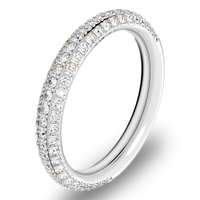
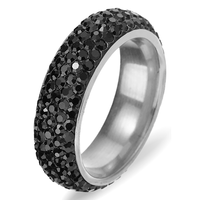
Zircon
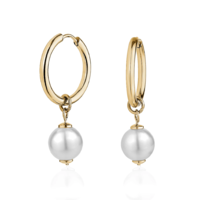
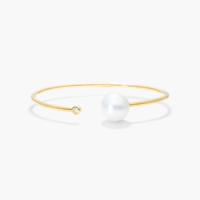
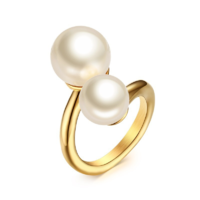
It includes natural pearls and imitation pearls. The prices and weights of different types of pearls can vary a lot, so you can choose the most suitable type based on your quality requirements and how you plan to use them.For dyed pearls intended for export, RoHS, REACH, and CPSIA tests are usually required, mainly to check whether lead, chromium, and mercury levels exceed safety limits.
Shell
It refers to cutting and polishing natural shells (such as pearl oysters, abalone shells, and luminous conches) into shapes like slices or beads. Shell pieces have strong surface malleability and are widely used as inlay components in jewelry. Shell beads feature natural textures and can substitute for some pearls. Their surfaces display natural iridescence and unique patterns, making them one of the most aesthetically pleasing and versatile natural materials for crafts.
Acrylic
Acrylic is a transparent thermoplastic made by polymerizing methyl methacrylate monomers. It is shaped through processes like extrusion, casting, or injection molding. Acrylic is a bright-looking plastic that comes in many colors, is easy to shape, and simple to work with. It’s widely used in jewelry and modern designs.
Semi-Precious/ Crystal
Semi-precious stones can be natural or synthetic. Natural ones form in nature, have beautiful colors and shine, but aren’t as expensive as diamonds or rubies. They might not be “top luxury,” but they’re still charming, with lots of colors and types—perfect for jewelry. Crystal stones are one type of semi-precious stone: transparent or semi-transparent quartz that looks shiny and clear like glass. Common ones include clear quartz, rose quartz, and amethyst. When processing semi-precious stones or crystals, there might be dyeing, resin filling, or heavy metal risks, so it’s best to do environmental tests (like REACH, RoHS, nickel release) to make sure products are safe and compliant.
Leather
Leather is a key material in jewelry design that brings texture, style, and feeling to the pieces.
Cord/ Thread
Strings and cords are flexible, durable, and come in many materials. They’re widely used for weaving, stringing, and decorating jewelry, adding depth and personality to the overall design.
Ceramic
Its main component is zirconium dioxide. Through high-temperature sintering and phase transformation toughening technology, it achieves high hardness along with excellent crack resistance and durability, making it hard to break. This ceramic is as hard and long-lastingly bright as a diamond, while also providing a skin-friendly and comfortable wearing experience. It gives jewelry a blend of modern style and elegant charm.
Carbon Fiber
Carbon fiber is a high-performance material made from carbon. It’s strong, lightweight, and corrosion-resistant. Different weaving patterns give it a cool, techy look, making it perfect for minimalist, industrial punk, or urban sports-style jewelry. Even though carbon fiber itself is mostly pure carbon (which is inert), so it’s generally eco-friendly and less likely to cause allergies, finished pieces usually include resin glue, metal settings, coatings, dyes, and packaging. Because of these, the final product still needs to meet environmental and safety standards. It’s a good idea to test for nickel (EN 1811), REACH SVHC, phthalates (6P), PAHs, heavy metals under RoHS, and skin sensitizers.
Wood
Wood is widely used in jewelry like bracelets, pendants, and earrings because of its unique grain, warm touch, and natural vibe, showcasing a sense of nature and beauty.
Resin
Resin materials like epoxy, unsaturated polyester resin (UPR), and TPU (thermoplastic polyurethane) are commonly used to make jewelry components through processes such as casting, molding, and injection molding. Resin is often used in jewelry to create lightweight, colorful, and versatile designs.
Acetate Sheet
Acetate sheets come from natural plant fibers like cotton or wood pulp. They’re made by reacting with acetic acid to form cellulose acetate. Then plasticizers, pigments, pearl powder, and clear agents are mixed in and pressed into sheets. Because acetate sheets come in lots of colors and patterns and are easy to shape, they’re often used to make trendy, colorful jewelry parts and inlay pieces.
Silicone/ Rubber
Silicone is mainly made of polysiloxane chains that become a soft, heat-resistant, and non-toxic elastomer after curing with a crosslinker. It’s widely used in jewelry, medical products, and items that come into contact with food.Rubber includes natural rubber and synthetic rubber. The main types of synthetic rubber are nitrile rubber (NBR), chloroprene rubber (CR), and ethylene propylene diene monomer (EPDM). Rubber is a highly elastic and flexible polymer material, commonly used for bracelets, necklaces, jewelry straps, coated parts, and elastic rings for earrings.
Name
Price Reference
Principle
App.
Effect
Advantages
Disadvantage
Color
Polishing
≈$0.09/cm² (3A)
Reducing surface roughness step by step through polishing wheel and abrasive friction to achieve a mirror finish.
Applicable to all product categories.
Strong luster with clear reflection, slight scattering in details.
Strong luster with clear reflection, smooth surface, and delicate touch.
The higher the glossy finish, the more prone it is to show fine scratches, fingerprints, and stains, requiring regular maintenance.
Propelling abrasive media at high speed onto the metal surface.
Design styles that need special matte or textured surfaces.
Matte / frosted finish.
Scratch-resistant, hides small flaws, and doesn’t easily show fingerprints.
Not shiny enough, so it’s not ideal for designs that aim for a high-gloss, reflective look.
Sandblasting
≈$0.05/cm²
Propelling abrasive media at high speed onto the metal surface.
Design styles that need special matte or textured surfaces.
Scratch-resistant, hides small flaws, and doesn’t easily show fingerprints.
Not shiny enough, so it’s not ideal for designs that aim for a high-gloss, reflective look.
Sand pressing
≈$0.067/cm²
Rolling the metal surface with diamond/diamond-coated tools.
Flat surfaces, arc surfaces, straight grooves, etc.
Large glitter particles create a diamond-sand-like effect with unique reflections and a bold visual impact.
Feels a bit rough to the touch and isn’t easy to clean.
Nail sanding
≈$0.25/cm²
Use nail-shaped punches to impact the surface of the jewelry at a high speed, forming countless tiny pits and protrusions.
Flat surfaces, arc surfaces, straight grooves, etc.
Shows a fine, subtle sparkle. Compared to sandblasting, it feels smoother and is gentler on the skin, plus it’s fingerprint-resistant and less likely to leave marks.
Needs the right lighting or angle to really shine; in dim light, the effect isn’t obvious. When used over large areas, the sparkle can look more scattered, and the processing cost is a bit higher.
Lathe carving
Cutting intricate patterns into the metal surface with rotary tools.
Flat surface and curved surface products, etc.
Fine, detailed patterns with a strong 3D look; designs can be updated quickly.
Slightly higher unit processing cost.
Embossing
≈$0.04/cm²
The patterns pre-designed on the mold are transferred to the surface of the jewelry material under a certain amount of pressure.
Flat, slightly curved, or curved products.
Strong 3D effect and clear texture, low cost, and high production efficiency for mass production.
High mold cost and limited to flat or slightly curved surfaces.
Etching
≈$0.06/cm²
Selectively dissolving the metal surface using chemical solutions, protecting undesired areas while exposing target sections.
Logos, text patterns, etc.
No molds needed, flexible and efficient, with fine text and patterns.
Limited etching depth, usually between 0.01 and 0.3 mm.
≈$0.01-0.6/cm²
Creating dimpled textures by hammering the metal surface.
Suitable for handmade, rustic, modern luxury, minimalist, and other style products.
Unique texture with rich visual layers. The technique is mature and can be used for mass production or custom orders.
Prices vary greatly depending on the process. Hand hammering is low efficiency and costly. Mold pressing is cheaper and more efficient, but hammering only creates texture effects and can’t show fine patterns or logos.
Laser Engraving
≈$0.04/cm²
Using high-temperature laser ablation to modify the metal surface.
Letters, logos, patterns, etc.
High efficiency, with precise pattern and text reproduction, flexible, and no molds needed.
Limited processing depth, usually between 0.001 and 0.05 mm.
≈$0.02/cm²
Cover the surface of the jewelry with liquid epoxy resin. It will cure naturally after several hours, or it can be cured rapidly through baking.
Colorful blocks, patterns, logo, etc.
Comes in many colors, giving a rich, saturated, layered look while also adding protection and a quality feel to the jewelry.
Slight depression after curing; minor color variation between batches.
Any color, transparent, translucent or opaque.
≈$0.06/cm²
Applying liquid epoxy resin, then polishing flush with jewelry surface.
Colorful blocks, patterns, etc.
Offers a wide range of colors and excellent hardness and wear resistance, making the jewelry surface smoother and shinier, and enhancing the overall craftsmanship and look.
Longer processing time; internal bubbles may cause pinholes after polishing requiring rework; minor color variation between batches.
Any color, transparent, translucent or opaque.
Bake Painting
≈$0.04/cm²
Spraying eco-friendly paint, then high-temperature curing.
Rich colors for entire jewelry or components.
Rich and even color, strong adhesion, wear-resistant and corrosion-resistant
Longer processing time, not suitable for quick delivery; minor color variation between batches.
Any color, glossy, matte or metallic.
Spray Painting
≈$0.02/cm²
Spraying eco-friendly paint, curing naturally.
Rich colors for entire jewelry or components.
Offers a wide range of color options with smooth, even coating; great for complex shapes and quickly adds depth and visual appeal to the product.
Prone to peeling, scratching or wear over time; minor color variation between batches.
Any color, glossy, matte or metallic.
Oiling
≈$0.01/cm²
Apply paint to the sunken or concealed positions of the jewelry, and let it dry naturally or dry it by baking.
Covers unpolishable areas, creates vintage/hip-hop styles.
Easy to process and suitable for small-scale handmade production.
Prone to fading, slight paint/thinner odor remains.
Blackening
≈$0.01/cm²
Chemical/electrochemical process creating black oxide layer.
Creates vintage/hip-hop styles.
Short processing time, lower cost.
Limited color options and the coating may peel off.